
LaGrange Previous Resident Sources
A backward address trail works across several eras. Start with the source closest to the date being studied, but anchor the place in the current parcel before accepting an old address match. The courthouse deed books carry the longest ownership line. Directories and census schedules add household evidence. Maps and plans explain the structure rather than the people.
| Source | Verified span | Keeper or access point | Evidence supplied |
|---|---|---|---|
| GSCCCA real-estate index | At least 1999 to present statewide | GSCCCA account or clerk terminal | Grantor, grantee, instrument, book/page, legal land link |
| Troup deed books | 1827-1927 cataloged | Troup Superior Court Clerk; 32 FamilySearch reels | Ownership transfers and legal descriptions |
| LaGrange and rural directories | 1929; recurring verified years 1946-1991 | FamilySearch and microfilm inventories | Time-specific names, work, spouses, addresses |
| Federal census | Published schedules through 1950 | National Archives and genealogy access points | Households, relationships, work, street context |
| Sanborn maps | 1895, 1900, 1911 | UGA/DLG and Library of Congress | Building form, use, materials, street layout |
| Building plans and permits | Plans mainly 1980s-present; city report examples 2022-23 | Troup Archives and City Community Development | Alteration dates, applicants, service address, project details |
For a recent property, use the parcel and deed index first. For an early twentieth-century home, add the nearest directory, census, and Sanborn sheet. If an address first appears in a rural title, check whether the LaGrange mailing city falls outside the municipal line.
Walk Troup Deeds Backward
The deed chain is the stable spine for previous residents research, even though it identifies owners rather than all occupants. Start in the Troup Board of Assessors QPublic record. Copy the parcel number, assessed owner, physical or situs address, mailing address, legal description, subdivision, lot, block, and any deed book/page reference. Situs means the land's physical address. The owner's mailing field is where tax notices go and may point elsewhere.
- Find the current owner's purchase deed in Troup County. Search that person as grantee, meaning the buyer who received title.
- Confirm the deed's legal description matches the parcel. A matching name without matching land is not enough.
- Take the seller, or grantor, from that deed and search the seller as an earlier grantee. Locate the prior purchase of the same land.
- Repeat the pattern while preserving lot, block, subdivision, acreage, boundary calls, and earlier deed references.
- When online coverage ends, use the Clerk's grantor/grantee indexes and deed books, then consult the cataloged 1827-1927 microfilm.
- Grantor and grantee
- The grantor transfers title. The grantee receives it.
- Chain of title
- The linked sequence of conveyances for the same land.
- Legal description
- The deed's formal land identity, based on lot and block, subdivision, or boundary calls rather than a postal label.
GSCCCA guarantees all counties in its consolidated index from at least January 1, 1999, but no official source states Troup's oldest online year. Direct address and map modes are Premium. The no-cost route is parcel to owner, then owner name to deed, with the free courthouse terminal as another channel.
Earlier LaGrange Deed Books
The FamilySearch catalog for Troup deeds confirms 32 reels filmed from courthouse originals, covering 1827 through 1927 and including indexes.
The catalog is a bridge, not a replacement for the official book. Record the volume, page, instrument parties, date, and full legal description, then ask the Troup County Clerk of Superior and State Courts for an official or certified copy when proof is needed.
One local volume shows why whole books deserve attention. The catalog description says Volume W contains land records and a list of surviving southern-army commanders and soldiers who died in 1863-64 and were buried in LaGrange's soldiers' cemetery. An index entry may point to more than a routine conveyance, so inspect nearby pages and front matter.
Pair LaGrange Households by Year
Once the ownership chain is sound, search for previous residents at the same place. LaGrange's known city directory evidence includes a reconstructed May 1929 collection, recurring volumes from 1946 through 1960, later city editions in 1969-70 and 1972-73, rural resident titles from 1977 through 1988, and verified late volumes through 1991. The detailed holdings belong on the LaGrange city directory page; here they serve as time markers for one address.
- Choose the directory year closest to a deed transfer or census year. Copy the entry exactly, including initials, spouse, work, and address.
- Search the next available edition in both directions. Log first and last appearances as intervals, not exact moving dates.
- Check the edition's street or householder section if one exists. No source confirms that every LaGrange volume has address-first access.
- Compare the closest released federal census and use the enumeration context to test household members and relationships.
- Use obituaries, probate, cemetery registers, and later deeds to explain departures, deaths, heirs, or address changes.
Directory canvasses could lag. A missing person may have moved, lived beyond the old city limit, been listed under a spouse or initial, or simply been missed. A rural title may capture a LaGrange postal household that never appeared in an urban canvass.
Lawful use. Research LaGrange past residents for genealogy, house history, estates, or civic study. Never use records to track, harass, or harm a living person.
Bridge a Changed LaGrange Address
No official source confirms a simple citywide renumbering rule or date. Do not invent one. When an address disappears, preserve the legal description and parcel geometry, then compare plats, deed references, directory street guides, and Sanborn sheets. The Morgan Street and New Franklin Road labels around Hill View Cemetery are a local warning that the same site may appear under more than one road name.
Sanborn maps document LaGrange in 1895, 1900, and 1911. They can show that a building existed, changed shape, or served a different use, but they normally do not identify its occupants. Archived plans add a later layer. Troup County Archives says its building plans are mainly from the 1980s onward and that residential plans are rare. Supply the property address and an approximate construction or renovation date. A failed plan search does not prove the building was absent.
Extend LaGrange's Property Trail
Georgia Archives microfilm can fill a gap when a deed reference or tax digest lies beyond the web portal. Its county cards also describe county creation and record disasters. Begin with the Georgia Archives county microfilm collection, then verify a candidate entry in the original series.
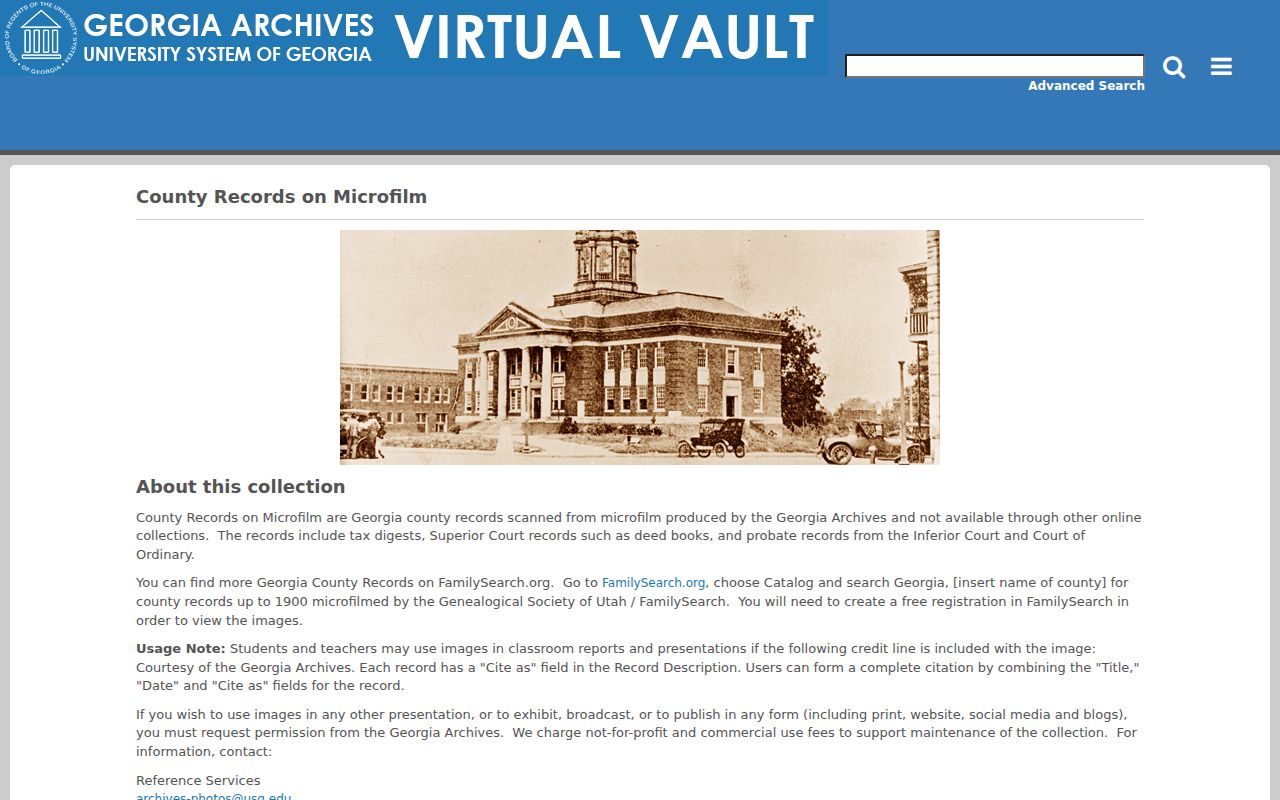
Tax digests show the taxable owner or property interest for a given year, not a full list of past residents. Use them to reinforce a deed chain or narrow the period when ownership changed. Probate records may then connect an estate, heirs, and a later conveyance.
LaGrange Records Survived the Fire
The 1936 courthouse fire sounds like an endpoint, but it is not. On November 5, an arsonist allegedly ignited gasoline by a first-floor telephone booth. The courthouse burned and a new Ridley Avenue building opened in 1939. Yet Troup County Archives describes its pre-1900 court holdings as especially thorough, and even 1933 burglary transcripts survived.
Read the Archives account, The Smell of Smoke, before assuming an early file was lost.
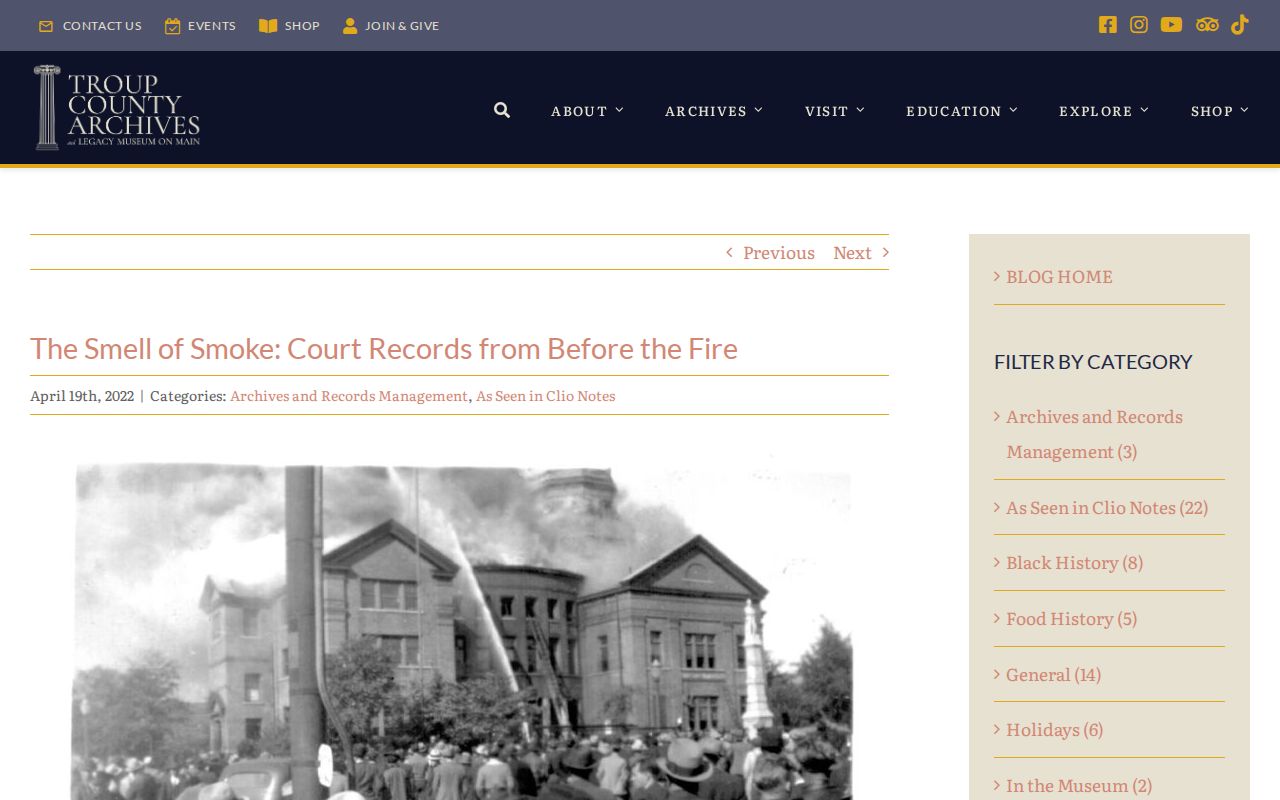
The right response is a series-by-series check: loose papers, minute books, transcripts, deeds, probate files, and transferred records may have different survival histories. Ask Archives staff for the precise record group and date rather than making a broad fire-loss request.
Complete LaGrange Resident Stories
Ownership and occupancy trails become personal when local sources are added. These sources can identify previous residents who never held title. The Callaway Beacon, published from 1949 through 1968, preserves mill-worker profiles, photographs, and family announcements. Historic LaGrange newspapers add obituaries, visitors, marriages, firms, and legal notices. Hill View Cemetery dates to 1830, while Mulberry Street Cemetery dates to 1863. City law requires records of each cemetery lot owner and each interred person, even though no public name-search screen was found.
For a deceased former resident, compare the obituary or death evidence with probate and the next deed. An estate deed may identify successors, but the link must be read from the instrument. For a living person's past address, stop at the public evidence and respect protected information. Safe at Home and VoteSafe can lawfully conceal residence data, and no amount of source combination should be used to defeat that protection.
Three or more independent dates make the conclusion stronger: one for title, one for the household, and one for the building or life event. When they conflict, record the uncertainty. A careful “[not established]” is more useful than a confident guess about who lived here before.